cultural

udeesha 2026 emerges as a landmark cultural festival in moradabad 01
cultural

A Blend of Heritage and Contemporary Creativity

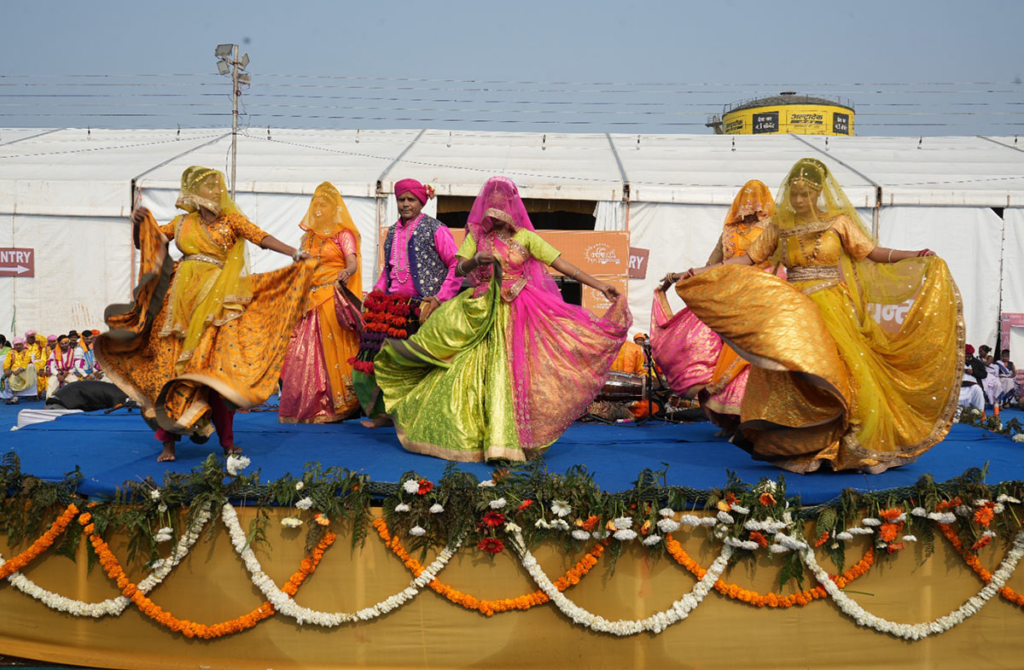
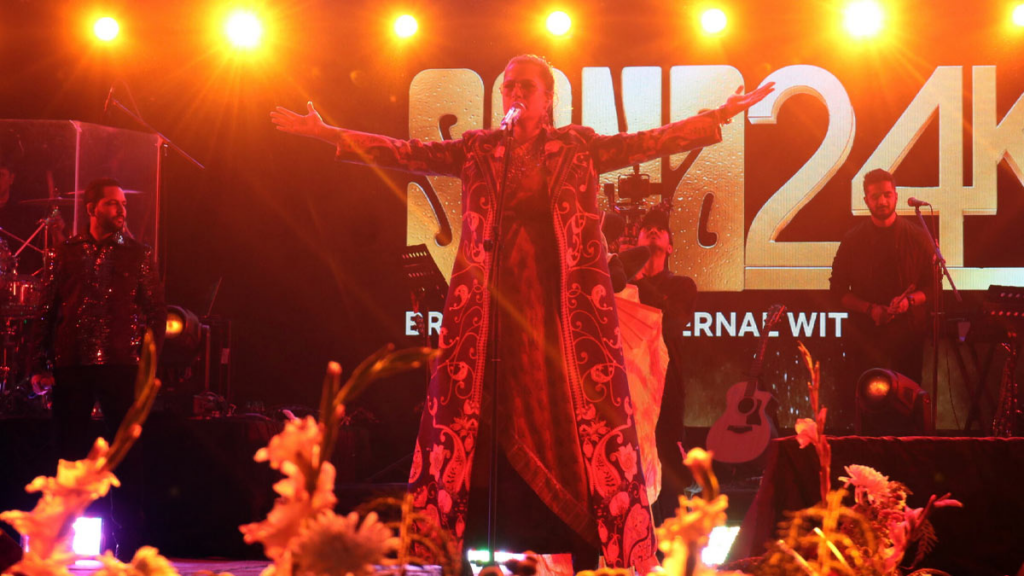
From early-morning rituals and workshops to late-evening concerts and Mushairas, the festival showcased a rare blend of classical heritage and contemporary expression. The presence of nationally acclaimed writers, poets, filmmakers, journalists, and performing artists—along with senior administrators, educationists, and cultural leaders—added prestige and gravitas to the proceedings. Day One: Ceremonial Opening and Star Performances Udeesha 2026 opened ceremonially at Dushyant Manch in the presence of leading cultural figures and dignitaries. The session “Moradabad ke Sangeet Gharane” featured Ustad Gulam Abbas Khan and Sunanda Sharma, moderated by Anjum Sharma, drawing a full house at Ramganga Lawns. Actor and author Ashutosh Rana followed with an engaging talk on theatre and cinema. The evening Light and Sound Show at Spandan Sarovar set a magical tone, while the opening night Star Concert by Sukhwinder Singh became a major crowd-puller. Day Two: Theatre, Poetry, and Classical Music Day Two consolidated the festival’s success with workshops, including a Theatre Kayarshala led by Swati Goyal, Ashish Pandey, and Pooja Rawat. Literary sessions saw exceptional footfall, particularly Wasim Barelvi’s much-anticipated session. Bhojpuri icon Manoj Tiwari added star appeal, while Pandit Sajan Mishra’s classical recital earned a standing ovation from connoisseurs. Day Three: Youth Engagement and Musical Highs Panels on creative writing, mental health, radio culture, and Urdu ghazal traditions marked Day Three. Senior journalist Saurabh Dwivedi’s session on journalism in the age of social media drew students and professionals alike. Bestselling author Chetan Bhagat filled Dushyant Manch with his interaction “Gen Z ki Kahaniyan”. The evening Star Night Concert by Sona Mohapatra became a musical highlight. Day Four: Cinema, Qawwali, and Poetry Day Four featured author Akshat Gupta’s talk on Hidden Hindu, alongside conversations on Indian cinema with Manoj Joshi and Anusha Rizvi. Cultural performances included Qawwali by the Niyazi Brothers and the folk presentation Bidesiya. The grand Mushaira and Kavi Sammelan, featuring poets such as Azm Shakri, Nawaz Devbandi, Shariq Kaifi, Ayesha Ayyub, and Popular Meeruthi, held audiences spellbound late into the night. Day Five: A Powerful Finale The final day sustained the festival’s momentum with workshops, Dastangoi performances, and panels on Indian knowledge traditions and women’s voices. The session “Kahani, Kirdar aur Cinema” brought together Gulshan Grover, Madhur Bhandarkar, and Virendra Saxena. The grand finale by Kumar Vishwas, presenting “Apne Apne Ram”, became the emotional high point of Udeesha 2026, earning a prolonged standing ovation. Organisers Reflect on an Overwhelming Response Speaking at the closing, the organisers said the festival’s success exceeded expectations. They highlighted the unprecedented participation, packed venues, and the warmth of Moradabad’s citizens, noting that Udeesha would now grow into a lasting movement for literature and the arts.
udeesha 2026 emerges as a landmark cultural festival in moradabad 0
cultural

Udeesha 2026 Emerges as a Landmark Cultural Festival in Moradabad

Inaugural Edition Concludes on a High Note The inaugural edition of Udeesha 2026 – Moradabad Literature Festival concluded on an emphatic high on January 27, 2026, emerging as one of the most successful cultural events ever hosted in the city. Spread across six days and multiple venues, the festival witnessed packed halls, standing ovations, and overwhelming public participation, firmly placing Moradabad on the national cultural map. Six Days, Multiple Venues, One Cultural Pulse Organised across Dushyant Manch, Ramganga Lawns, Jaun Elia Zone, Bhikhari Thakur Manch, Spandan Sarovar, and Sharda Mandap, Udeesha 2026 transformed Moradabad into a vibrant centre of literary thought, music, theatre, and artistic dialogue. Thousands of visitors attended sessions and performances each day, making the festival a true people’s celebration.

kalyan india august 07 2025 members of the sha 1754594837600
cultural, Latest News

Moradabad’s dholak makers add festive beat to Ganapati celebrations

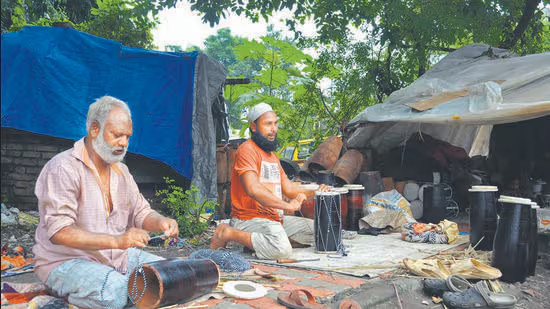
For 70 years, 90 families from the Shaikh community have brought their dholki-making tradition to Kalyan for the Ganapati festival, celebrating culture and unity. Kalyan, India – August 07 2025: Members of the Shaikh (Dholki Wali) community from Moradabad, Uttar Pradesh, craft and sell traditional dholkis in Kalyan during their annual visit—preserving a 70-year legacy of rhythm, craftsmanship, and cultural connection through generations. August 05.. Pic on Thursday in India on 07 2025 – Story By Anamika Gharat ( Photo By Pramod Tambe). THANE: Every year, for the last 70 years, 90 families from the Shaikh community in Moradabad, Uttar Pradesh, arrive in Kalyan just before the Ganapati festival. They come here with one mission — to make and sell traditional hand-made dholkis, a percussion instrument that adds a magical rhythm to the Ganapati festivities. From the moment the Ganesha idol arrives, to the aartis, and the final visarjan, or immersion, the beats of the dholak drum up festive cheer. It’s as if their rhythm pulses through the heart of the city. These families, from the ‘Dholkiwali’ community, live in Kalyan for about a month. In that short time, they bring with them not just their instruments but a rich legacy of tradition and hard work passed down through generations. In the narrow lanes of Bail Bazaar in Kalyan West, where these families live, the sound of hammers, ropes and laughter fills the air. Their presence is not just about selling dholkis, it’s a cultural exchange, a passion for art, and the joy of togetherness. Mohammad Hasan, a 65-year-old dholki maker, has been coming to Kalyan since he was 15. “Our seven generations have never missed a single year,” he says proudly. “The Ganapati festival is very important to us. We bring our material – wood and leather – from our village, where other family members help prepare it. Our dholkis are strong enough to last 5-6 years, if handled well.” Hasan recalls learning to make dholkis when he was a child. “We never went to school, but we played with tools and wood from a young age. Identifying good wood for dholaks became our game,” he laughs. “Now, when we cut wood, we plant trees.” The entire village back in Moradabad is involved in the craft. Dholki-making is not just a profession, it’s their identity. Men, women, and even children from the community take part in this annual journey. They don’t just sell dholkis but also play them during local events and Ganapati celebrations. Many are invited to homes and pandals to perform, adding vigour and rhythm to every aarti and procession.