Temples

deccanherald 2f2025 01 01 2fcjd3e1vx 2fistock 2060758269
Temples

Another age-old temple reopens, this time in Moradabad after 44 years

The development comes in light of multiple abandoned or locked temples in various parts of Uttar Pradesh being reopened for prayers. Moradabad (UP): Decades after it was closed over communal violence in Moradabad, a temple in the Daulatabagh area has been reopened by local administration and authorities, according to officials. The development comes in light of multiple abandoned or locked temples in various parts of Uttar Pradesh being reopened for prayers. After 44 years, the temple was reopened on Monday, officials said. “On the administration’s orders, a team comprising police and municipal corporation staff began operations to reopen the temple. There has been no opposition or unrest, and the locals are cooperating in the effort,” Nagphani Police Inspector Sunil Ku… After the reopening, it was found that some temple idols were misplaced or missing, Kumar said. He added that local authorities are now overseeing the restoration work, ensuring the space is cleaned, repaired, and made ready for regular worship once…

moradabad
Temples

Moradabad: Hindu Temple In Muslim-Majority Area, Closed After 1980 Communal Riots, Restored By Uttar Pradesh Government

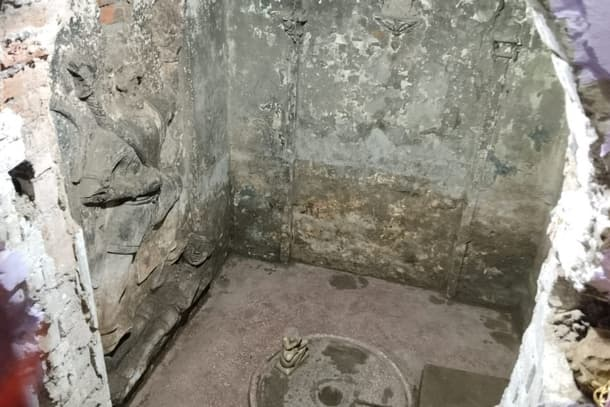
In the series of reopening and restoration of closed Hindu temples in Uttar Pradesh, the district administration of Moradabad has reinstated a temple, thought to be a century old, which reportedly has been shut since 1980 due to the outbreak of communal violence in the city. The Gauri Shankar Temple is located in the predominantly Muslim region of Nagfani in the city. While carrying out restoration work, the authorities unearthed the temple’s inner sanctum, where they reportedly found some damaged idols of gods. Currently, renovation efforts are in progress, with the intention of returning the temple to its “original state”. Meanwhile, a considerable number of people assembled at the temple on Monday (30 December) to observe its recommencement. To avert any potential mishaps, law enforcement officers have been stationed at the location. Already, a complaint has been filed by a local alleging that he had faced “threats” each time he tried to “reopen the temple”. The whole situation started when a local named Seva Ram stated that his forefathers had been the priests and guardians of the temple. On 27 December, he lodged a complaint with the district administration and police and requested them to intervene. He further accused that an individual who supposedly bought the house adjacent to the temple three years prior, had illegally encroached upon the land. “In my complaint, I stated that the temple had been closed since 1980 after the death of my grandfather, Ganga Saran, who was murdered during the riots,” 41-year-old Seva Ram said. “My family, along with seven others (family), who lived near the temple, moved to a different location due to threats from residents of another community. After we left, the temple was abandoned,” he added. Upon receiving the complaint, Moradabad District Magistrate (DM) Anuj Singh instructed Sub-Divisional Magistrate (SDM) Ram Mohan Meena to conduct an inspection of the site and carry out an investigation into the issue. “We consulted members of all communities, and there was a consensus that the temple should be reopened. After receiving their agreement, we proceeded with the process,” the SDM said on unlocking of the temple, which had been closed for a long time. “The inner sanctum was excavated. Inside, we discovered broken statues of deities, as well as the Shivalay (Shiva Parivar). Renovation work is currently underway, and efforts are being made to restore the temple to its original form,” he added. Seva Ram has assisted the district administration in their restoration efforts by supplying them with a supposed 1950 map of the temple,

fgjhsdgfjhsdgfgk
Temples

UP: Kali Mata Temple in Moradabad witnesses devotees’ huge gathering on Shardiya NavratriRead more

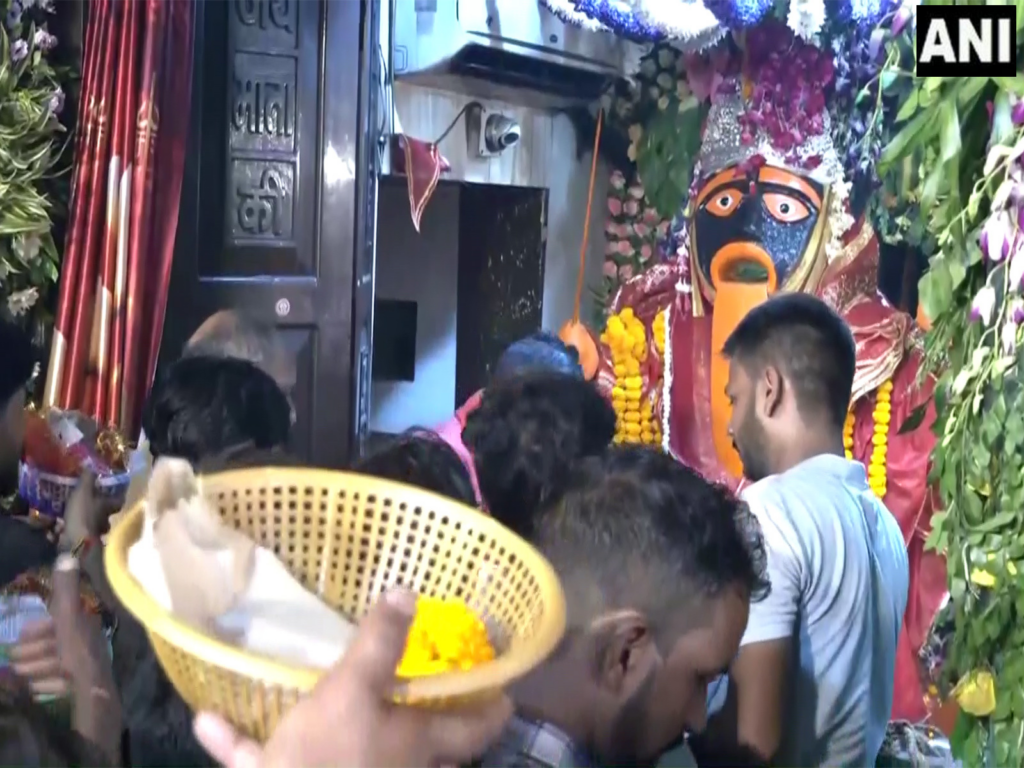
Devotees throng Kali Mata Temple in Moradabad on first day of Shardiya NavratriA huge crowd of devotees gathered at the Kali Mata Temple in Moradabad, Uttar Pradesh, on the first day of Shardiya Navratri to offer prayers and seek blessings. The surge began early in the morning as worshippers queued up for darshan and rituals, marking the start of the nine-day Hindu festival dedicated to Goddess Durga. Temples across the country also saw large turnouts, including Devkali Temple in Ayodhya and other major shrines in Delhi and Mumbai, with devotees participating in traditional aarti and offerings. The festival celebrates the divine feminine energy and is observed with rituals, devotional singing, and cultural traditions throughout its duration

1 2026 01 22 14 09 47
Temples

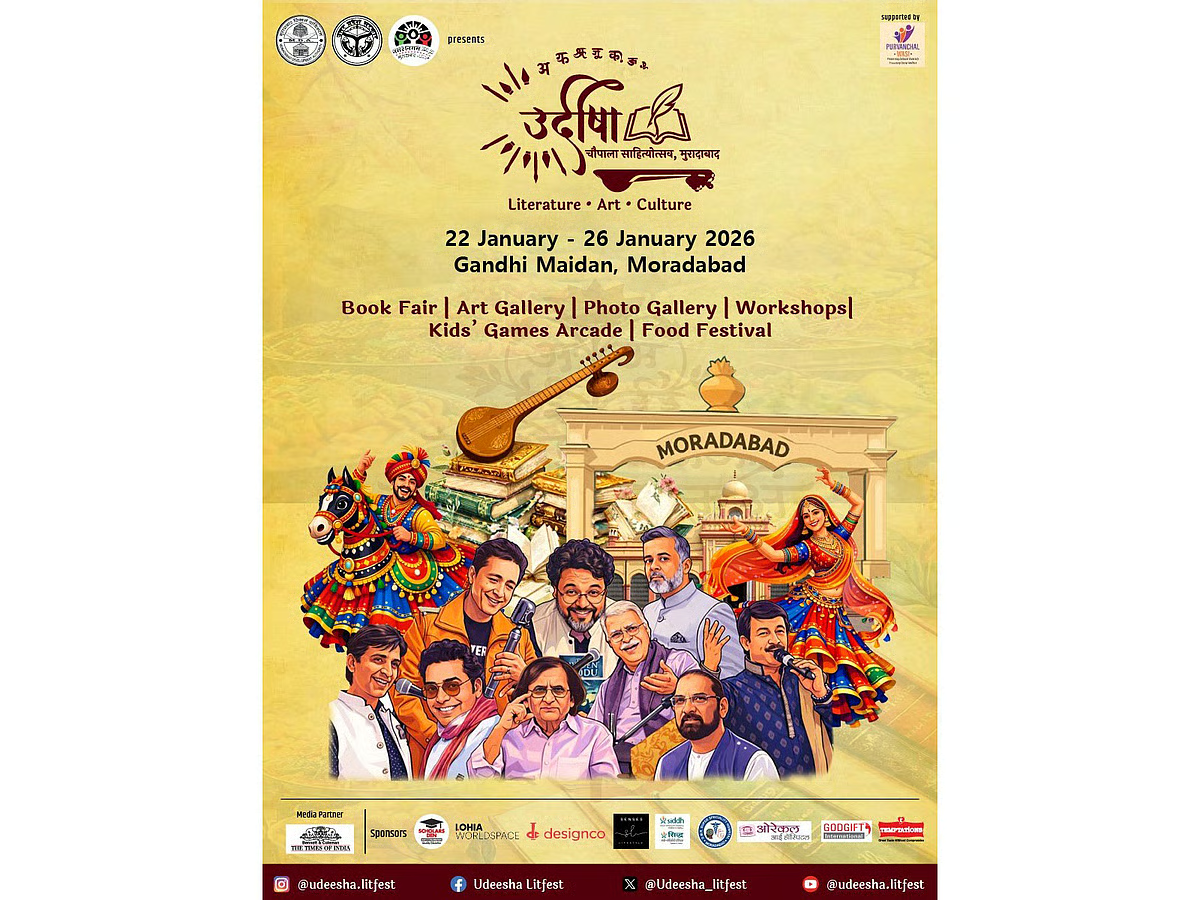
How Udeesha Is Building a New Cultural Identity for Moradabad

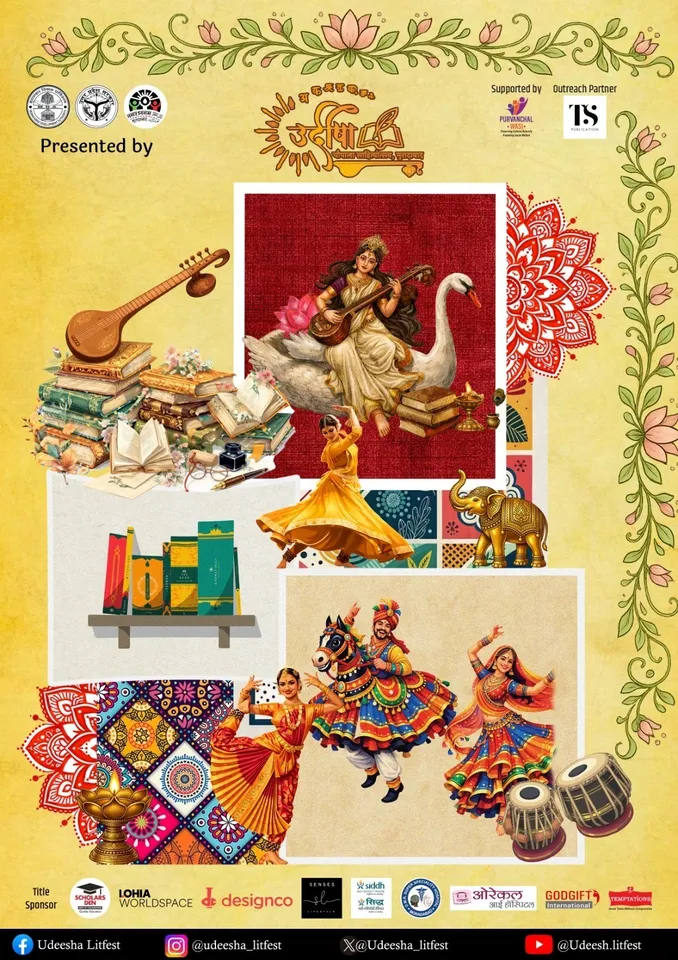
Udeesha 2026 launches Jan 22 in Moradabad—5-day lit fest featuring Ashutosh Rana, Sukhwinder Singh, Chetan Bhagat, Kumar Vishwas, Wasim Barelvi. Free public access across Dushyant Manch, poetry, Dastangoi, Bhojpuri culture. Moradabad is preparing to step into a larger cultural conversation as Udeesha 2026, The Moradabad Literature Festival, begins on January 22. Scheduled to run for five days until January 26, the festival is positioned as one of the most ambitious literary and cultural gatherings ever held in western Uttar Pradesh. With an expansive programme that brings together writers, poets, performers, thinkers, and artists from across the country, Udeesha aims to establish Moradabad as a serious destination for ideas, dialogue, and creative exchange. The festival will unfold across multiple prominent venues in the city, including Dushyant Manch, Ramganga Lawns, and the Jaun Elia Zone. Each space has been chosen to host a wide range of sessions, from formal literary discussions to open cultural performances. The structure of Udeesha reflects a clear intent to move beyond a conventional literature festival format. Alongside book conversations and author interactions, the programme includes poetry readings, Dastangoi, theatre, folk and classical music performances, Bhojpuri cultural sessions, and workshops designed to encourage participation rather than passive listening. The opening evening on January 22 is expected to draw significant public attention, with performances by actor Ashutosh Rana and singer Sukhwinder Singh. Over the following days, Udeesha will host an extensive line-up of nationally recognised voices. Among those scheduled to appear are poet Wasim Barelvi, singer and actor Manoj Tiwari, lyricist and poet Alok Srivastava, journalist Saurabh Dwivedi, author Chetan Bhagat, food historian Pushpesh Pant, poet Gauhar Raza, writer and screenwriter Akshat Gupta, television personality and folk singer Ila Arun, and poet and academic Kumar Vishwas. This diversity of the lineup is representative of the festival’s efforts to integrate various strands of India’s cultural and intellectual currents through the same forum. One of the major attractions of Udeesha 2026 will be the Grand Mushaira and Poetry Conference that will be a part of the festival. Poetry has always been an important part of the culture of the region, and the festival aims to not only pay homage to this tradition but also reach out to the contemporary poets in the region. The objective of the festival, according to its stated purpose, extends beyond being a venue for famous personalities. Udeesha has been designed as an initiative that would fill the gap between the cultural calendars of big cities and smaller cities that have always supported literary pursuits but have remained less visible on the national map. By organizing such a big festival in Moradabad, the organizers also want to counter the notion that serious engagement with literature and culture happens only in certain big cities. The event focuses on accessibility. The fact that most of the events during the Udeesha 2026 festival are open and free to the public is an indicator of the fact that the organizers are keen on making the festival accessible to the public. The festival is open to students, young writers, young artists, and members of the public to engage with the ideas and perspectives on literature, cinema, media, technology, spirituality, and the knowledge traditions of India. For Moradabad, Udeesha means more than a week of performances and dialogue. It means the redefinition of the cultural identity of the city. By hosting a festival which gains national prominence but remains grounded in local culture, Moradabad shows its commitment to intellectual and artistic pursuits. For those coming from outside the region, the festival means a chance to experience a different cultural context, one which has been influenced both by the past and the present. With the rise of literary festivals all over India, Udeesha 2026 is a festival that comes with a point of view. This is a festival that is more inclined towards listening rather than speaking, more towards including rather than showcasing, and more focused on creating a platform rather than creating a spectacle. For all those people who are associated with reading, writing, art, or are students of ideas, Udeesha 2026 is a reason for them to be present in Moradabad this January. 

.
Temples

Moradabad gears up for Udeesha 2026, five-day National Literature Festival

The festival will be held across key venues in the city, including Dushyant Manch, Ramganga Lawns, and the Jaun Elia Zone. Moradabad: Moradabad is set to host Udeesha 2026, The Moradabad Literature Festival, a five-day celebration of literature, art, music, and cultural dialogue from January 22 to January 26, 2026. Conceived as a national-level cultural platform rooted in regional expression, Udeesha aims to place Moradabad firmly on India’s literary and cultural map. The festival will be held across key venues in the city, including Dushyant Manch, Ramganga Lawns, and the Jaun Elia Zone. Udeesha 2026 has been designed as an inclusive public forum that brings together writers, poets, artists, journalists, performers, students, and readers. Its programme spans literary conversations, poetry readings, Dastangoi, theatre, folk and classical music performances, Bhojpuri cultural sessions, and interactive workshops, reflecting the many ways literature and culture intersect with everyday life. The inaugural evening on January 22 will feature performances by acclaimed actor Ashutosh Rana and renowned singer Sukhwinder Singh. Over the following days, the festival will host a distinguished line-up of speakers and performers from across the country. Confirmed participants include celebrated poet Wasim Barelvi, singer and actor Manoj Tiwari, poet and lyricist Alok Srivastava, senior journalist Saurabh Dwivedi, bestselling author Chetan Bhagat, food historian Pushpesh Pant, poet Gauhar Raza, writer and screenwriter Akshat Gupta, folk artist and television personality Ila Arun, and poet and academic Kumar Vishwas, among others. A major highlight of Udeesha 2026 will be its Grand Mushaira and Poetry Conference, which will bring together classical and contemporary poetic voices. Poetry, long central to the cultural fabric of the region, occupies a core place in the festival’s vision, underscoring its continued relevance in public discourse. Udeesha 2026 has been conceptualised with a clear objective of taking literature and cultural conversations beyond metropolitan centres. By hosting a festival of this scale in Moradabad, the organisers seek to challenge the notion that serious literary engagement is confined to large cities. The festival places regional voices alongside nationally recognised figures, encouraging dialogue, exchange, and shared cultural ownership.Most sessions at Udeesha 2026 will be free and open to the public, reinforcing its commitment to accessibility and community participation. Students, emerging writers, artists, and local residents are encouraged to attend and engage directly with speakers and performers.With its focus on inclusivity, dialogue, and cultural depth, Udeesha 2026 represents an important step toward decentralising India’s literary landscape. The festival aspires to become a recurring platform that nurtures ideas, celebrates creativity, and strengthens Moradabad’s cultural identity on a national stage.